Blog
Why Filipino Work Culture Might Just Be the Secret Sauce Your Remote Team Needs
TL;DR: Filipino professionals bring a rare combination of communication skill, loyalty, and cultural alignment that makes remote collaboration easier and more effective. Their strong sense of responsibility and adaptability makes them a reliable choice for growing companies that want stable, high-performing remote teams.
Key Takeaways:
Remote work has reshaped how teams operate across borders. But here’s the truth: many businesses still think success is just about getting the right tech stack and overlapping work hours. In reality, the biggest hurdle in building a remote team isn’t timezone management or productivity apps. It’s cultural misalignment.
When values, communication styles, and work ethics clash, collaboration stalls. Messages get misunderstood, morale drops, and turnover quietly creeps in. That’s why the culture behind your remote team isn’t just a nice-to-have. It’s the foundation. And few cultures are as uniquely positioned to support seamless remote collaboration as Filipino culture.

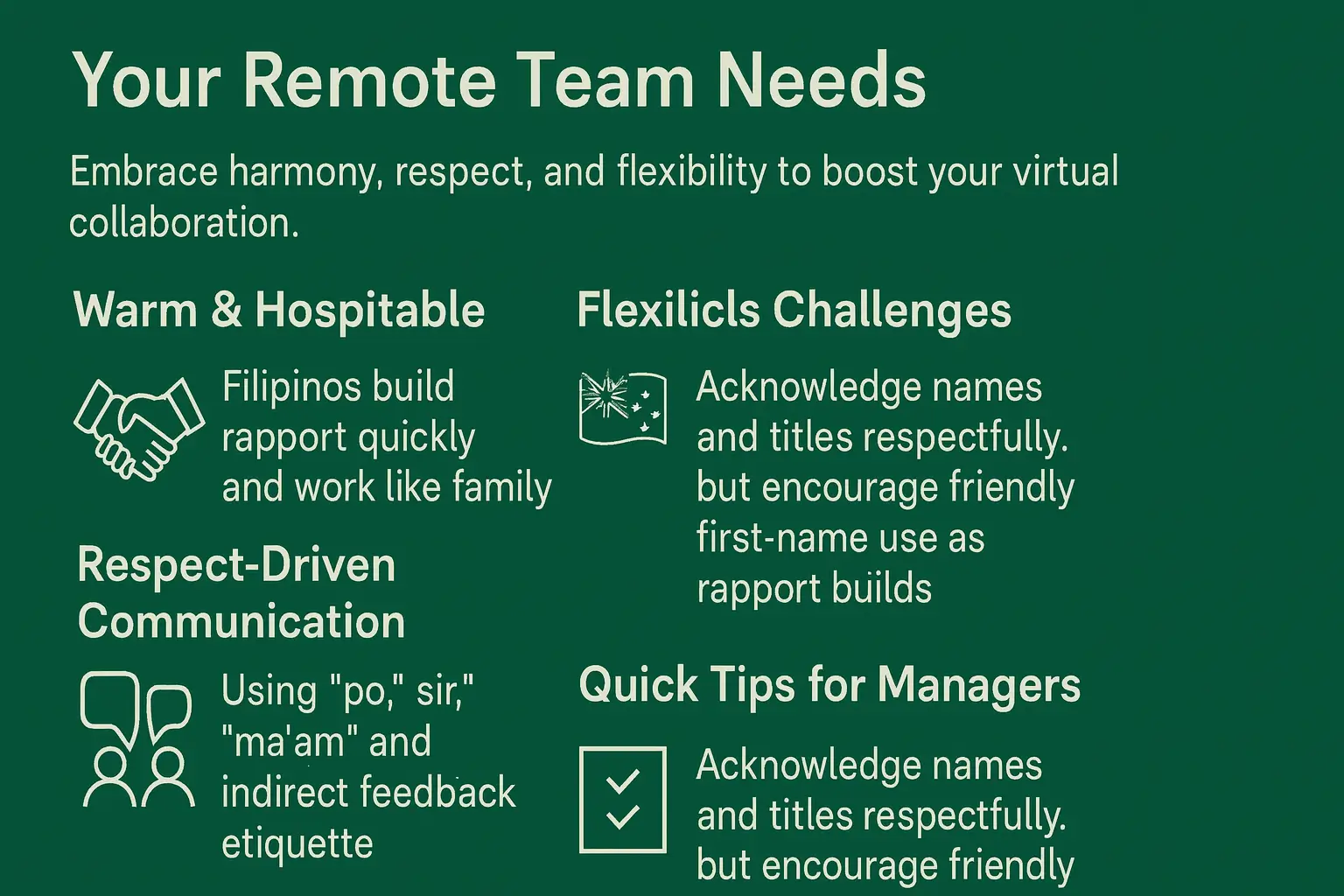
Filipinos are raised in communities that value hierarchy, but not to the point of blind obedience. In the workplace, this translates into a respectful, coachable team dynamic that managers appreciate. Leaders often experience smoother implementation of goals and coaching initiatives.
Filipino culture leans toward high-context communication. This means people are good at reading between the lines, catching nuance, and understanding implied expectations. In remote settings where text and tone can be misread, this cultural trait leads to smoother day-to-day interactions. Teams don’t need everything spelled out. They sense the rhythm and adapt accordingly.
Filipinos are globally known for their hospitality. This same generosity and warmth carry over into professional settings, often in ways that elevate team morale and collaboration. Their natural people-first mindset builds psychological safety and comfort, even in virtual environments.
Family is everything in Filipino culture. This core belief influences how professionals engage at work. When companies show care and fairness, Filipino team members often respond with strong commitment and long-term loyalty.
Every business has rough patches. What makes Filipino professionals stand out is their willingness to stay engaged during difficult times. Whether the team is working under tight deadlines, adjusting to unexpected changes, or managing demanding clients, they remain consistent in both output and attitude. This steady presence helps maintain team momentum even when others might disengage. Their loyalty is reflected not only in retention but also in the way they commit to solving problems rather than walking away from them. Resilience becomes part of the team’s rhythm, contributing to a stable and dependable remote work environment.
The stereotype of Filipino politeness often leads outsiders to think they avoid feedback. In reality, many Filipino professionals view feedback as a pathway to development rather than a personal critique. They are often eager to understand how they can improve and perform better. Once a supportive environment is established, they actively engage in conversations about performance, ask thoughtful questions, and respond with genuine intent to apply suggestions. This openness builds a foundation for meaningful coaching relationships, where growth becomes a shared goal rather than a top-down directive.
English is one of the official languages in the Philippines. Most professionals are educated in English and use it daily in both formal and casual settings. Beyond language fluency, there is a shared understanding of Western work standards, including how meetings are run, how deadlines are handled, and how professional communication is maintained. This familiarity reduces the amount of time businesses spend adjusting to new hires and improves early-stage collaboration. It also means that expectations are met more consistently, as there is alignment in communication style and business etiquette.
This shift is one reason why more companies are choosing Filipino remote professionals over local hires, a trend explored in this article on the outsourcing shift to the Philippines.
Filipino professionals are adaptable by nature. They can handle different time zones, workflows, and work styles with ease. This adaptability is anchored by a strong sense of responsibility and work ethic that shows up in how they manage deadlines, meet expectations, and stay organised.
Companies looking for high-quality work without inflated costs are beginning to question the value of traditional hiring, as explained in this breakdown comparing offshore and in-house teams
Adaptability shouldn’t mean saying yes to everything without question. Filipino team members balance adaptability with initiative. When expectations are clear, they not only deliver but look for ways to improve the process. They ask smart questions, propose ideas, and stay engaged. That makes for dynamic teams that evolve with your business.
OutsourceKey is not a staffing agency. We’re your partner in building culturally aligned, high-performing remote teams from the Philippines.
We understand that success in remote work is about more than ticking boxes for skills. It’s about finding professionals who match your values, your pace, and your long-term goals.
At OutsourceKey, we:
We’ve helped fast-growing companies build dependable teams that feel like in-house extensions. The difference isn’t just in who we hire – it’s how we think about your team.
Let’s talk. At OutsourceKey, we focus on building teams that integrate smoothly into your business. Our goal is to provide professionals who work in sync with your values, respond to your priorities, and support your growth.
Book your free consultation today to see how Filipino culture can strengthen your remote team’s collaboration and consistency.